

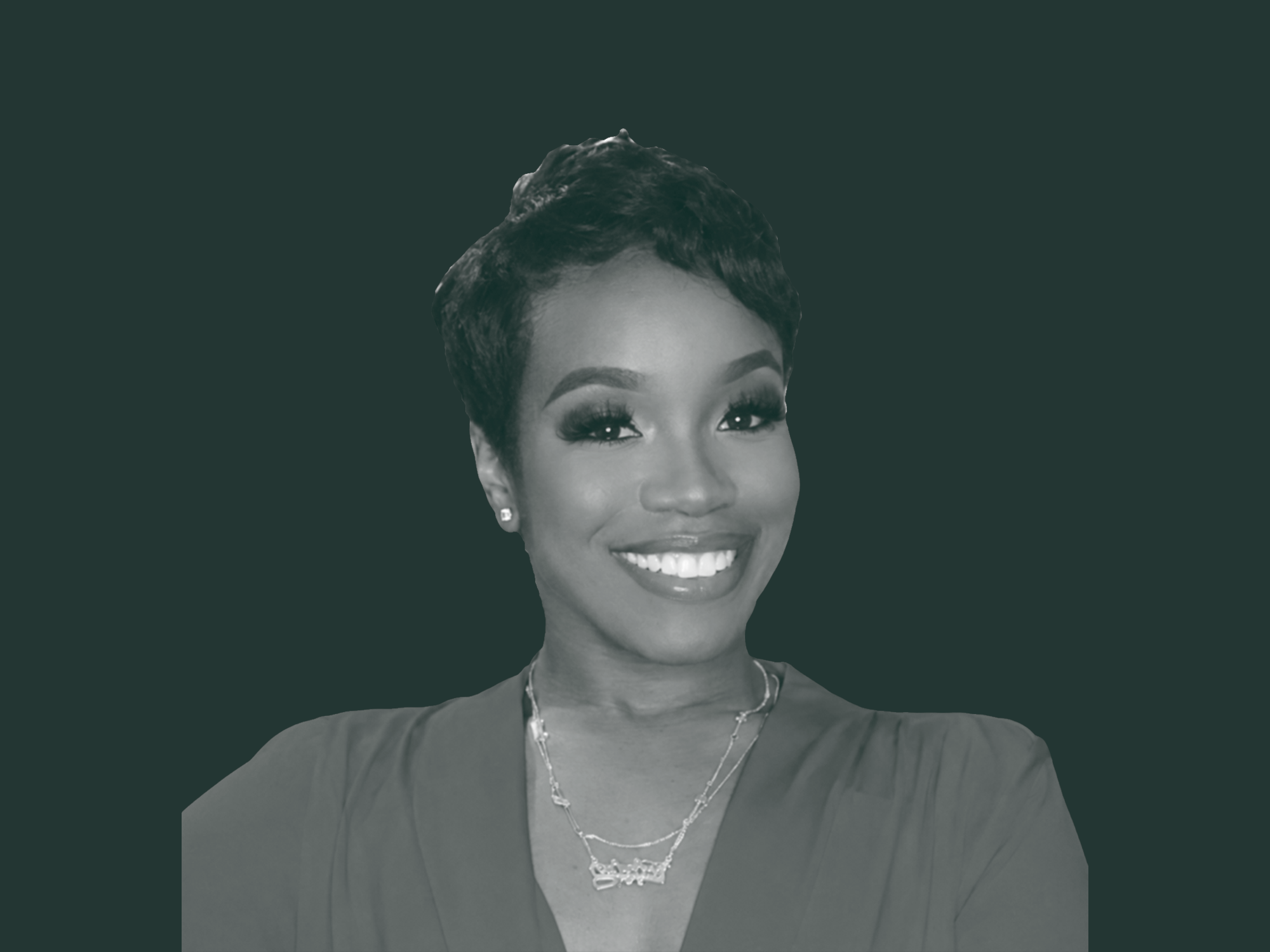
Meet Cherline Arnoux
Meet Cherline Arnoux, a Behavioral Health Clinician and a close partner of Vital CxNs’ Maternal Health Equity Initiative.
Cherline Arnoux is a Behavioral Health Clinician, a proud member of the Boston Alumnae Chapter of Delta Sigma Theta Sorority Inc., and a close partner of Vital CxNs’ Maternal Health Equity Initiative. As a co-facilitator for our community-based maternal health convos, Cherline has joined groups of birthing folks, youth, and fathers, sharing her expertise and insights on perinatal mental health, community support and resources, and ways to recognize when someone might need additional care. We sat down with Cherline to discuss her inspiration for her journey to maternal health work, the importance of women maintaining their own sense of self, and her belief that humans, but especially mothers and their children, need “a village” to thrive.
Cherline Arnoux was raised in Boston in a multigenerational Haitian family where care was always shared. Cherline’s mother was not just the matriarch of her family, but a source of wisdom and counsel beyond her immediate family. Her mother’s home was a gathering place—a stop along the way for relatives, friends, and children who needed a hand. As the youngest of three, Cherline grew up surrounded by immediate and extended relatives who helped raise one another. Only later did she fully understand how much that experience had shaped her.
“I truly believe in the village raising the child,” Cherline says. This belief now informs her work as a behavioral health clinician with the Boston Healthy Start Initiative, part of the Boston Public Health Commission. Since 2021, Cherline has supported the mental health of Black mothers from pregnancy through the first 18 months of their child’s life.
[Involvement with DCF] does not mean that you’re a bad mom, a bad dad, or a bad parent or guardian. Things happen, life happens. So how do we get you back on track?
Her path to this work was not a straight line. Known as “the little lawyer” growing up due to her outspoken nature as a child, Cherline originally studied criminal justice at American International College, imagining a future as an attorney. However, after graduating, she learned that the law career she envisioned for herself did not leave enough time for family, which conflicted with her dream of raising her own family the way she was raised. It was then that Cherline decided to take a different professional path to pursue her passion of working with children and families.
Cherline obtained a master’s degree in social work from Wheelock College, eventually working for the Massachusetts Department of Children and Families (DCF), where she tried to help families feel seen rather than defined by a difficult moment. The way she thinks about it is: “[Involvement with DCF] does not mean that you’re a bad mom, a bad dad, or a bad parent or guardian. Things happen, life happens. So how do we get you back on track?”
The COVID-19 pandemic added a new weight to the secondhand trauma Cherline was already carrying from her work. That weight, combined with a spark of inspiration from watching the show Grey’s Anatomy, prompted her pivot to working with babies and families in the maternal health space. When the Boston Healthy Start Initiative created a new role to respond to the rise in maternal morbidity and mortality during COVID, she applied. Today, her work includes individual sessions, support groups, community events, and education about perinatal mental health. She helps clients reflect on their experiences and see themselves in a new light.
Because she is not a mother herself, she once struggled to find her voice as a clinician focused on this topic, but a colleague helped her name her place in the work: as an ally. She now sees herself as a reminder that mothers deserve care and recognition as whole people.
As women, black women, women of color... we're just constantly giving, giving, giving, and we forget to pour into ourselves.
A common exercise Cherline invites clients to do is name ten things that bring them joy, apart from motherhood. The question can be surprisingly difficult, she notes, because “As women, black women, women of color... we're just constantly giving, giving, giving, and we forget to pour into ourselves.” Watching women reconnect with parts of themselves, even in small ways, is one of the most rewarding parts of her job.
Cherline also recognizes that emotional wellness is shaped by cultural beliefs, as well as the conditions of everyday life. Some people, she explains, are in a place of “I can't even think about my mental health right now because I don't know where I'm going to sleep. I don't know where my next meal is coming from.’” Cherline encourages community members to listen when someone says they are struggling, learn what resources are available nearby, and help connect people to support
She emphasizes that talking openly about mental health can help others, too: “Sometimes we’re going through [difficult] things, and [if we talk about it], on the other side of [that] can be not only healing for ourselves, but healing for the person coming behind us, the next generation.” In fact, she has created a platform aimed at healing through storytelling called Her Story, Our Voices.
Cherline practices what she encourages in others, pouring into herself with exercise, music, prayer, and a good spa day so she can continue to show up for others in this work.
Written by Briana Acosta (October 2026)