
Neighborhood Food Action Collaborative
Centering community and convening creating cross-sector partners to increase access to food across Boston.
Objective

Through collaboration, education, advocacy and innovative programming, NFAC seeks to create solutions for a more robust, accessible and equitable food ecosystem in Boston.
About
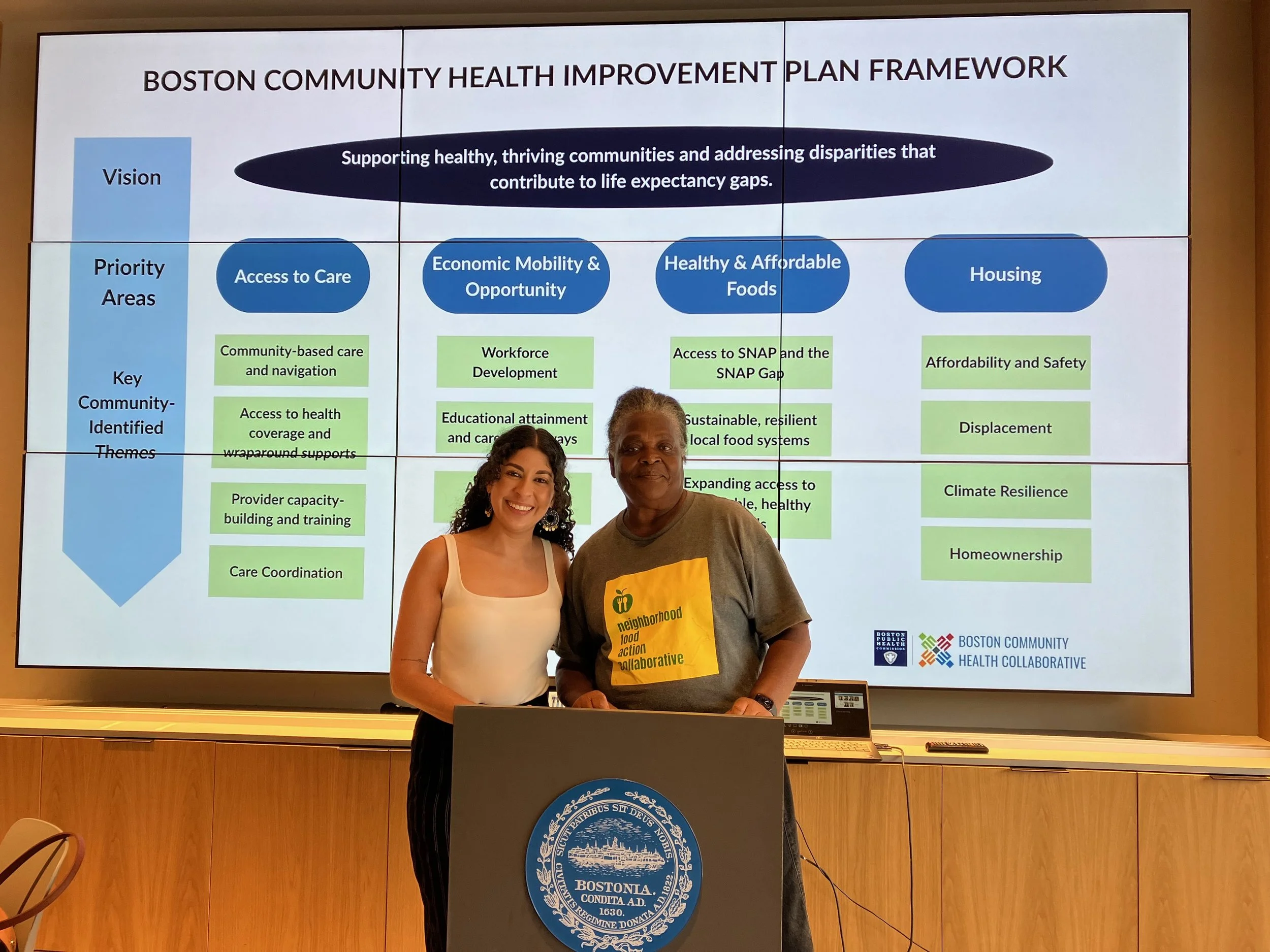
The Neighborhood Food Action Collaborative (NFAC) is a community-centered, cross-sector network made up of community residents, community-based organizations, and local healthcare and government institutions.
The collaborative was formed during the height of COVID at a time in which a state of emergency, coupled with an influx of food resources demanded a coordinated, community-led response.
To date, through bi-weekly community meetings, NFAC continues to provide a platform for community residents to design solutions to address food insecurity in their own communities AND for cross-sector partners to convene regularly to ensure programs and resources are getting to those most in need.
Work In Action:
First point
Second point
Third point

It is important that we empower our community to advocate for themselves and be a part of the decision-making. This is what community is all about.

Rebecca Riley Greene, Community Leader
Community Leaders & Partners






Peer-to-Peer Model
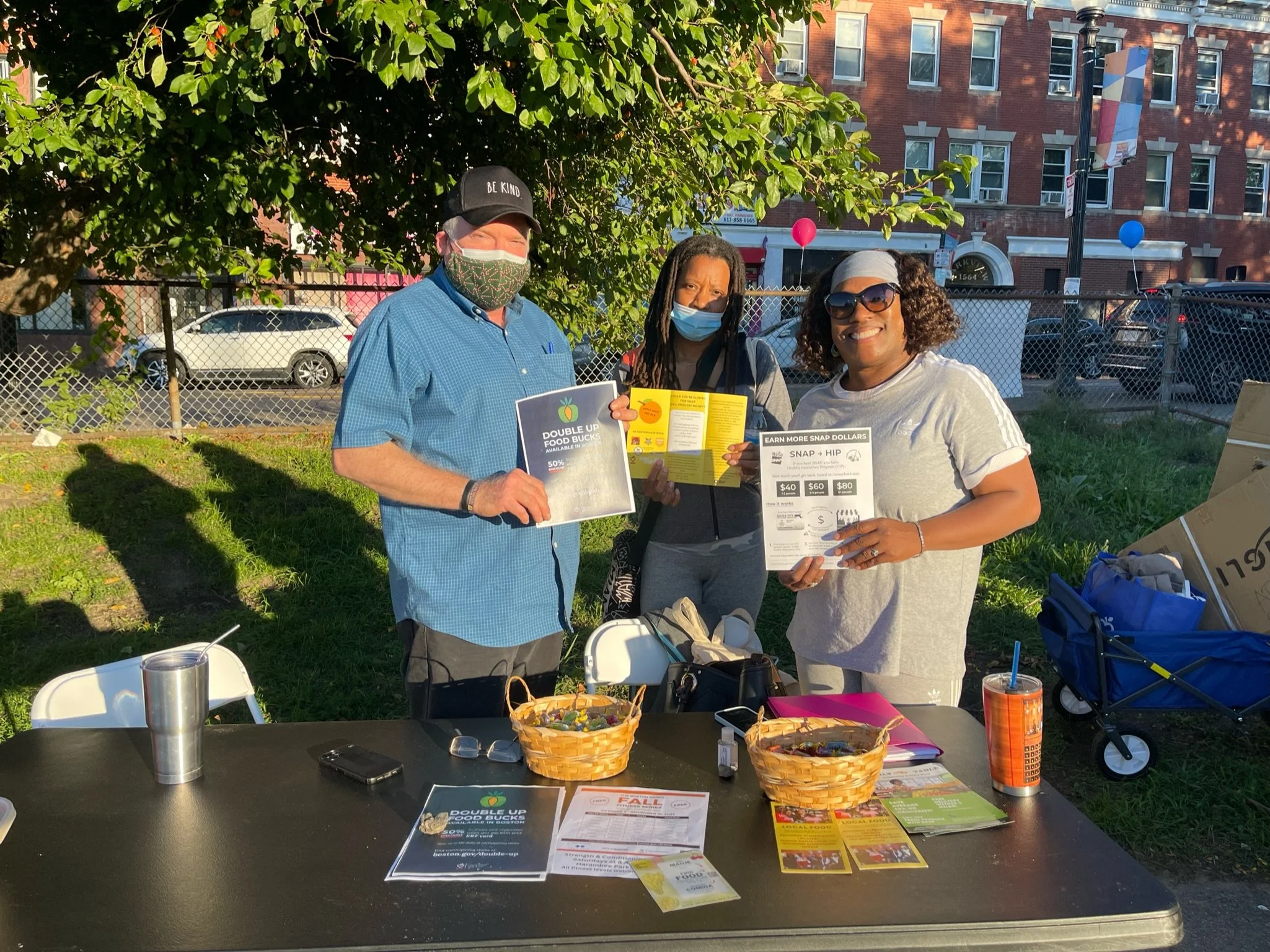
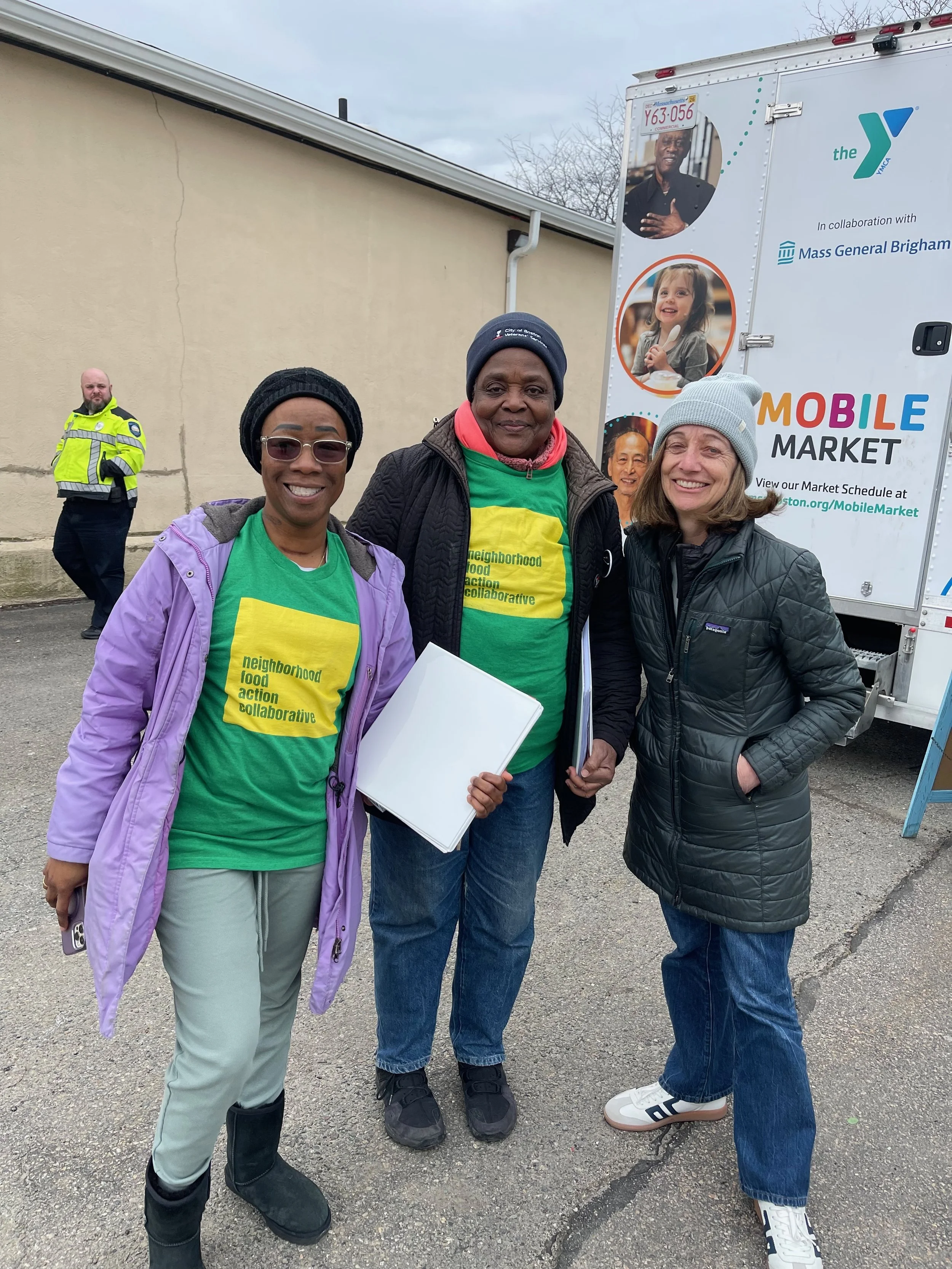
In partnership with Mass General Brigham, we hire and train community members to provide culturally and linguistically accessible education and support around government-funded benefit programs like the Supplemental Nutrition Assistance Program (SNAP), as well as nutrition.
This peer-to-peer model, which activates the power of community voice and builds community ownership, is an example of our reimagined model of community health.


Policy & Advocacy
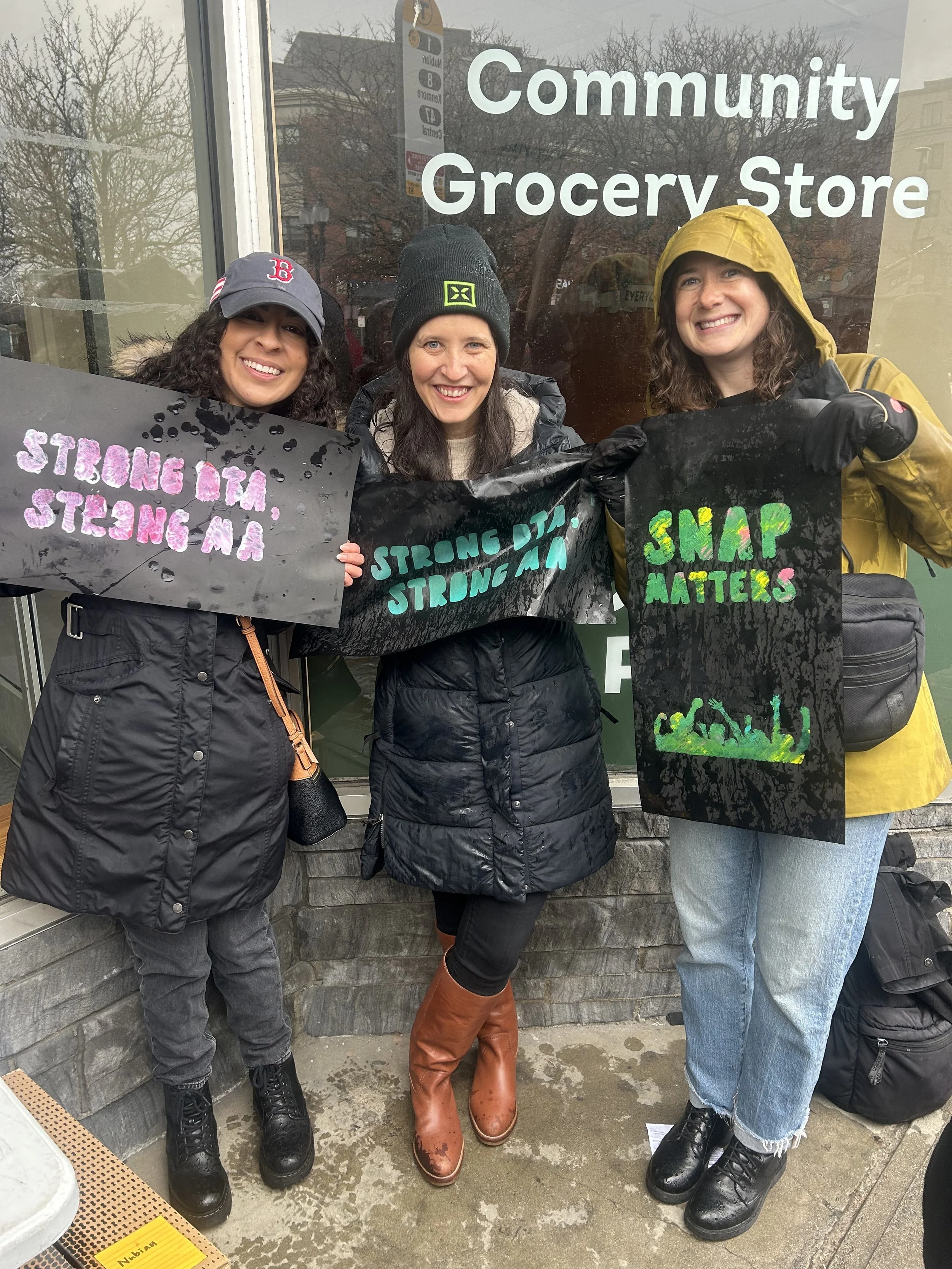
In partnership with the Boston Food Access Council (BFAC), we empower community members to leverage their lived experience to advocate for local, state, and federal policy changes that advance food justice in Boston. We support these grassroots leaders in mobilizing their communities to carry out advocacy actions like town halls, rallies, press conferences, providing testimony for legislative hearings, letters to policymakers, and more.

Impact to Date
55
Community members participated in paid professional development opportunities
254
Community members participated in policy and advocacy activities
34
Community meetings hosted from 2025 to 2026
4,189
Individuals were connected to food and nutrition resources by our peer advocates
6,313
Downloads of our Food Resource Guide in 2025
